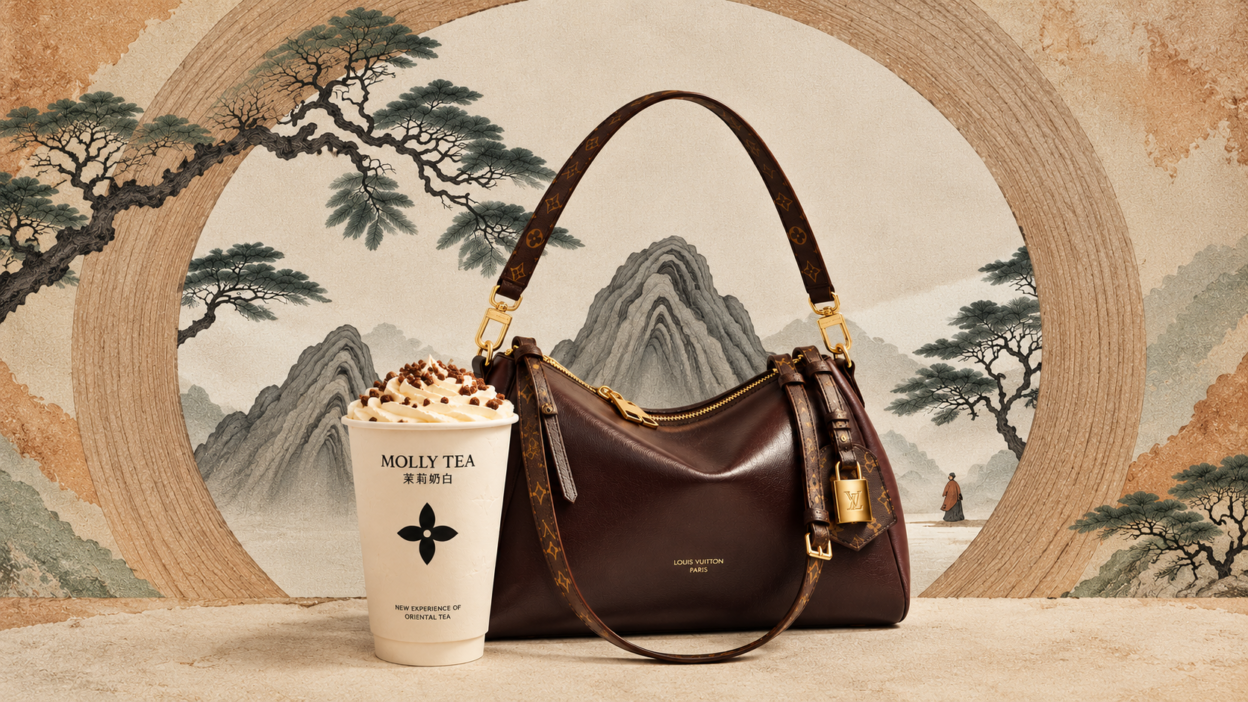
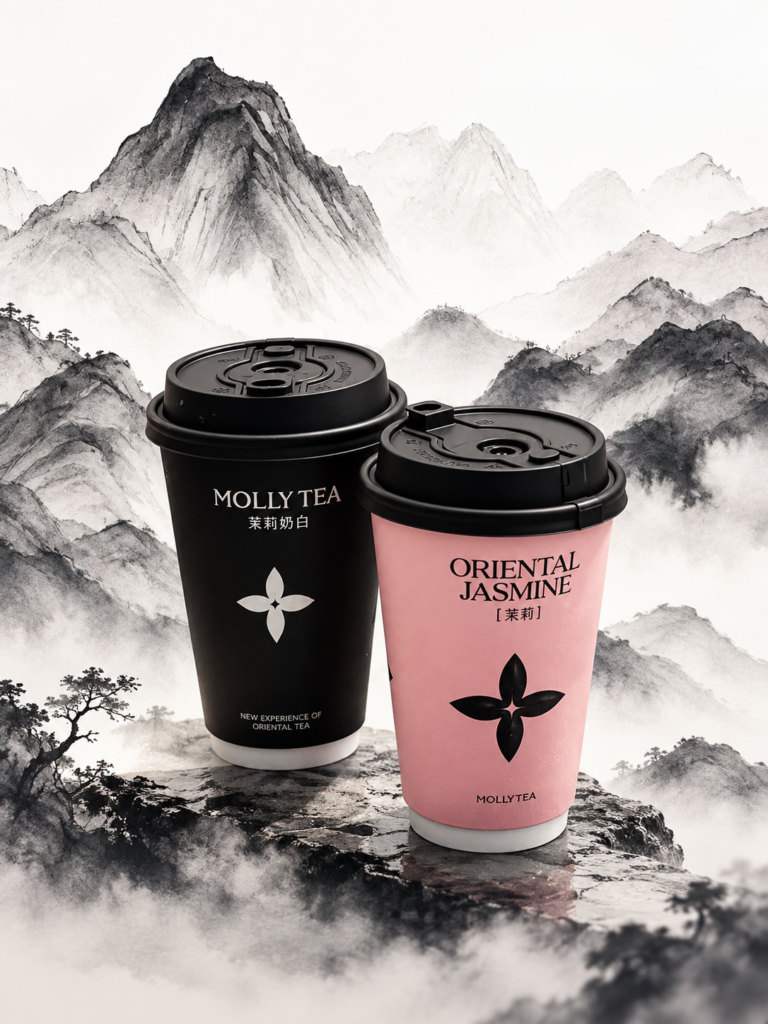
A popular Shenzhen-based Chinese tea chain Molly Tea has been ordered to pay 10.3 million yuan (£1.1m; $1.5m) in damages to French luxury house Louis Vuitton after a court ruled that the four-petal leaf monogram on its $3 cup infringed upon a Louis Vuitton trademark, fuelling an online debate over intellectual property protection and cultural heritage.
LOUIS VUITTON V. MOLLY TEA TIMELINE
The case pits Louis Vuitton Malletier a French luxury goods house established in 1854 and now a subsidiary of LVMH Moët Hennessy Louis Vuitton SE against Shenzhen based beverage company Molly Tea Catering Management Co., Ltd. Founded in 2020.
Louis Vuitton’s monogram collection introduced in 1896, is built around an interlocking LV initials pattern accompanied by three floral devices: a four-petal flower, a circular quatrefoil, and a concave diamond containing a floral motif. Louis Vuitton has used a combination of these motifs continuously for more than a century and are among the most widely recognised brand identifiers in the global luxury market, with multiple trademark registrations across the world including in China, across relevant goods and services classes.
Molly Tea brand constructed around jasmine tea, an underrepresented category in the Chinese milk tea market. The brands name “Molly” is a phonetic reference to “mòlì (茉莉)”, the Chinese word for jasmine. The brand witnessed a rapid expansion reaching more than 2,400 stores across China and internationally as of mid-2026 including locations in the U.S. and gained recognition as the first freshly made tea drink brand focused on floral scents in the Chinese market saturated with fruit-led products. Since its founding, the tea brand adopted a four-petal floral device as a central element of its visual identity.
How the Dispute Started
Molly Tea attempted to register its four-peal floral device with the China National Intellectual Property Administration as a trademark under application number 81049590, however the same was rejected. The Chinese IP Office cited two of Louis Vuitton’s earlier flower device registrations as grounds of denial and any subsequent applications by Molly Tea for four-petal floral designs were similarly refused or invalidated.
Despite the repeated rejections by the IP Office, Molly Tea continued to use the four-petal floral device in commerce and the device appeared on storefronts, beverage cups, packaging, digital platforms and promotional materials acting as the primary visual identifier alongside the brand name.
Consequently, Louis Vuitton filed for trademark infringement proceedings before the Suzhou Intermediate People’s Court. The case was accepted on May 15, 2025 under case number (2025) Su 05 Min Chu No. 617, with both the principal operating company and a franchise store (Dongxia Beverage Shoop in Wuzhong Economic Development Zone) named as defendants.
The Ruling
On July 2, 2026 the Suzhou Intermediate People’s court issued a first-instance judgement ordering Shenzhen Molly Tea Catering Management Co., Ltd. To cease all infringing activities, pay economic damages and reasonable enforcement costs totalling CN¥10.3 million (US$ 1.5 million) and publish public statements on its official platforms to eliminate adverse effects.
Molly Tea has stated that it reserves the right to appeal against the order, furthermore the brand instead of completely removing the impugned flour-petal floral device has instead altered the mark from a black-and-white combination to a purple and gold, which has raised further contentions in the media and the netizens.
THE LEGAL REASONING
Why Chinese Courts Sided with Louis Vuitton
China’s Trademark law operated on a “first-to-file” basis and exclusive rights are confined to the registered mark and the approved goods or services. Although it has been noted that administrative refusal itself does not constitute a judicial finding of infringement, the conflict expressly identified by the administration forms an important factual basis for assessing the defendant’s state of knowledge in subsequent civil proceedings. In other words Molly Tea’s decision to continue using the four-petal floral device, despite CNIPA’s rejection was evidentiary proof of knowledge of infringement in litigation.
Trademark Use
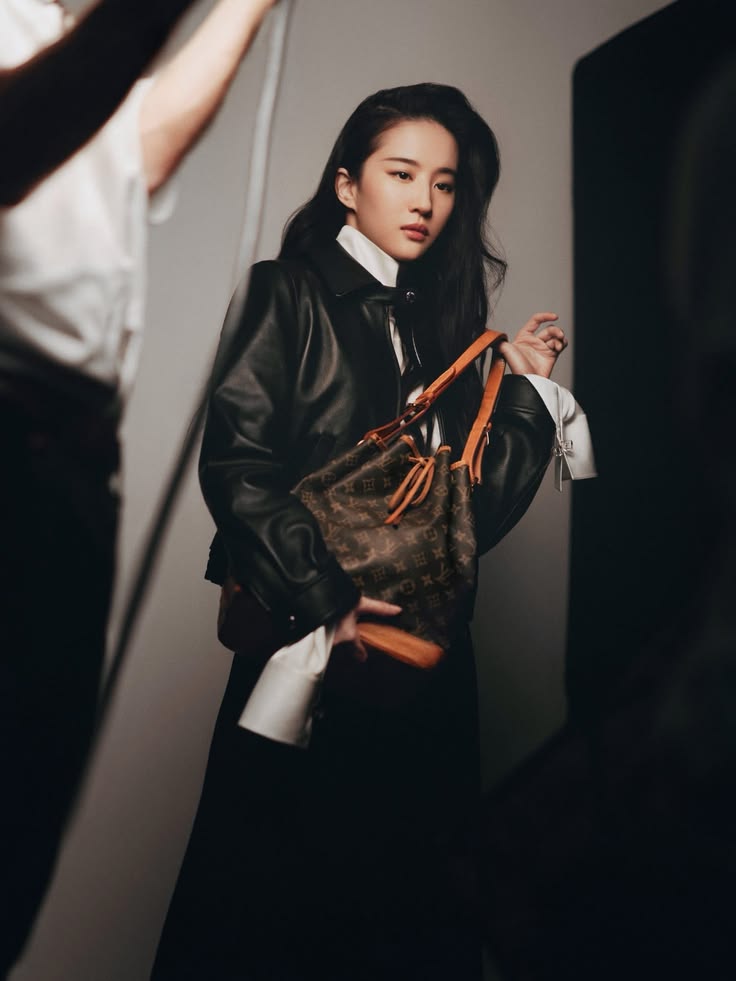
The Court acknowledged that the four-petal floral patterns have appeared across various traditional design contexts for centuries, however Louis Vuitton’s registered flower devices are not merely simple geometric figures or combinations of elements in public domain. The court was of the opinion that the French luxury house had invested substantial resources over many decades to sustain the commercial use of the flower device and thereby the same had acquired a level of distinctiveness that causes consumers to associate it solely with Louis Vuitton as a source identifier.
The court added that the presence of a decorative function did not by itself remove a mark from the scope of trademark use. The operative question is whether the consumers recognised or associated the floral device as indicating from a particular commercial origin, which in this case they did.
Louis Vuitton’s monogram, a flat, symmetrical four-petal flower woven into its wider canvas pattern, was registered in China in 1997 and paired with its commercial popularity outweighed Molly Tea’s proprietary rights in its impugned mark.
Likelihood of Confusion
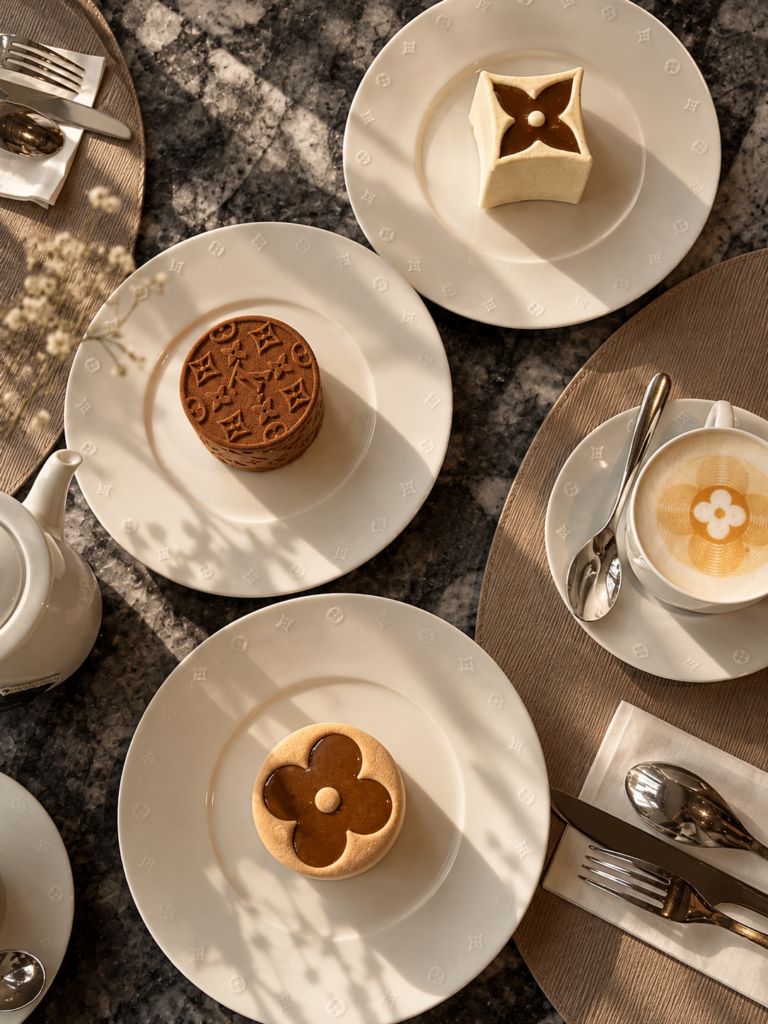
When analysing the test of “likelihood of confusion”, the court extended its application of the principle beyond a mere confusion with respect to the origin or manufacturer of the goods. It was noted that the consumers purchasing milk tea products were not likely to believe that such products had originated from the French luxury house, however, in light of widely publicised collaborations between luxury brands and food and beverage companies in the recent years, the consumers could reasonably conclude an association in the form of a licensing or co-branding arrangement between the parties.
The court concluded that confusion as to such a commercial association was sufficient to establish trademark infringement.
THE CULTURAL BACKLASH
WHO OWNS AN ANCIENT FLOWER?
The court’s order was met with a diverging reaction on the internet, with some netizens expressing frustration over a foreign entity/brand controlling a design believed to be part of China’s cultural heritage.
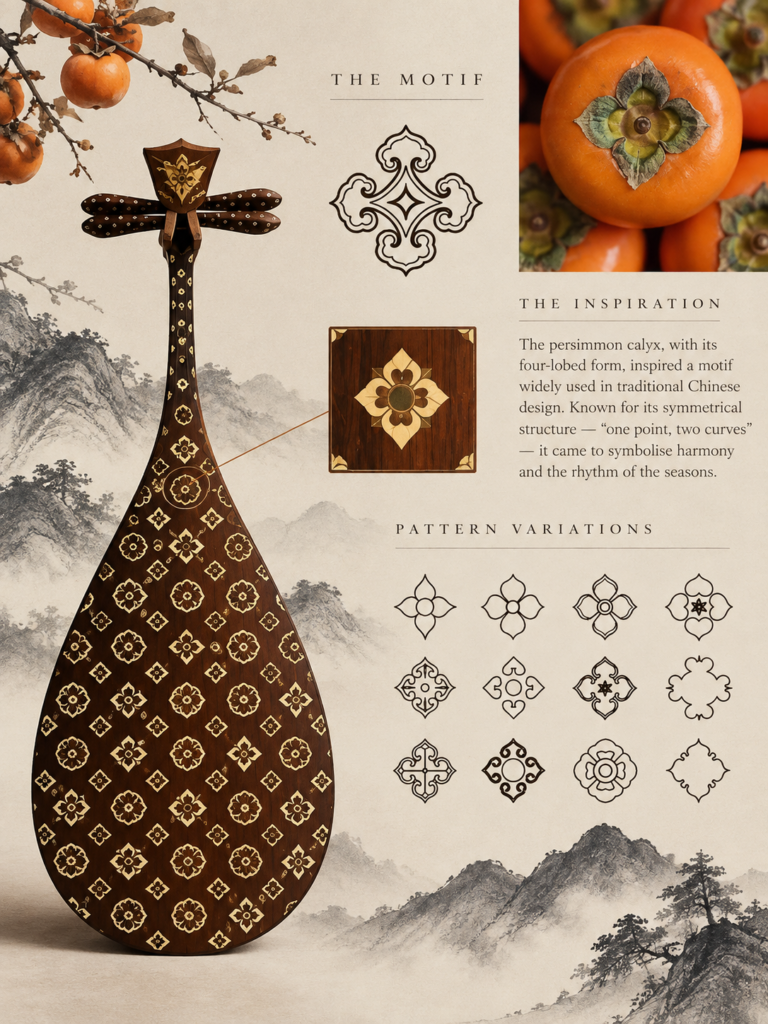
One widely circulated comparison placed patterns from a Tang Dynasty rosewood pipa, a traditional Chinese lute, side by side with a Louis Vuitton monogram, and critics pointed out that the four-petal design has existed in Chinese culture since the Tang dynasty (618-907), roughly a millennium before Louis Vuitton adopted its version of the motif in the 19th century. Other Chinese netizens also shared pictures of Buddhist temple carvings and garden lattices depicting similar four petal flower patterns further emphasising the relevance of the monogram in Chinese culture, aesthetic and design.
Much of the criticism centred on the perceived unfairness of a Western luxury house asserting exclusive rights over a geometric floral motif that many commentators argued echoed traditional Chinese decorative patterns. The controversy has unfolded against a backdrop of heightened cultural and national identity in China, where owning Louis Vuitton has, in some circles, become a contentious statement. This raises a broader question: how should trademark law approach designs that draw upon cultural motifs long predating their commercial adoption by luxury brands?
A useful parallel can be found in the Japanese Patent Office’s refusal to register Christian Louboutin’s iconic red-sole trademark. As discussed in our earlier analysis of the red-sole saga , the Office considered that red had long been used in footwear for its aesthetic appeal, including before Louboutin introduced its signature sole in 1996. Consequently, the colour was not considered sufficiently distinctive to warrant trademark protection.

On the opposite side of the spectrum, some have also sided with the Court’s decision stating that there indeed existed a likelihood of confusion between a bubble tea chain and one of the world’s largest luxury brands.
It is important to note that the legal answer to cultural objection is narrower than the public debate suggests. Trademark law does not protect an abstract shape or culturally common motif in the way copyright protects an original work. It protects a specific registered configuration used as a source-identifier in commerce. Louis Vuitoon’s claim isn’t “we invented the four-petal flower” but instead “we registered this particular rendering of a four-petal flower as a mark identifying our goods, and that registration predates your use”.
The decision invites an interesting comparison with the broader question of cultural appropriation and trademark exclusivity. Can a luxury house claim exclusive rights over an aesthetic that already belongs to the visual vocabulary of a culture? The Japanese IP Office’s approach offers one perspective: where a design element is already commonplace or culturally established, its later commercial adoption does not automatically entitle a brand to monopolise it.
Cultural commonality of a general shape doesn’t of a general shape doesn’t automatically defeat a validly registered, specific trademark, though it can and likely on appeal be raised as an argument about the mark’s distinctiveness or about bad faith in the opposite direction i.e., that Louis Vuitton itself drew on public-domain cultural patterns when it registered the mark.
What This Means for Brand Builders and Marketers
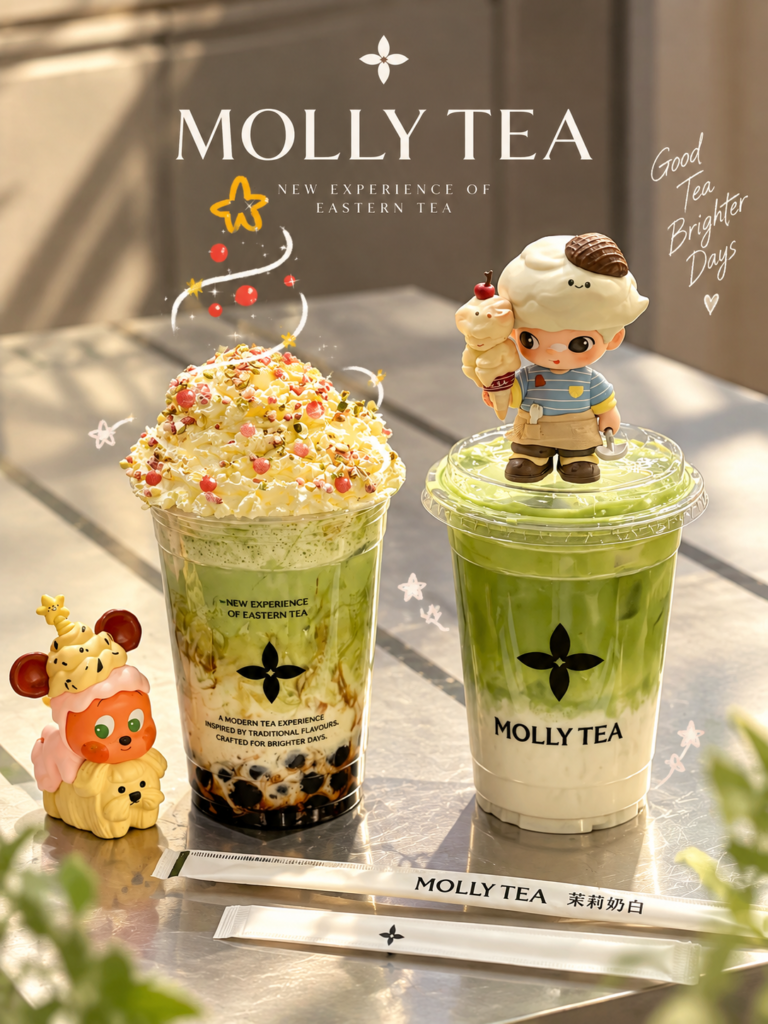
The most commercially useful fact in this entire case in the one least discussed. Molly Tea’s flower logo wasn’t organic brand evolution but rather a rebrand explicitly built around “oriental aesthetics” positioning. This is precisely where creative direction and trademark risk can intersect. A stylistic reference to an established aesthetic may, sometimes unintentionally, edge closer to a specific, litigated brand asset than the creative brief ever anticipated.
The takeaway for brands is not to avoid floral motifs or culturally inspired design altogether. It is to conduct visual trademark clearance on the specific configuration of the proposed design, checking it against registered marks in every market of operation rather than relying solely on generic design references or prior art.
For luxury houses such as Louis Vuitton, whose brand equity is reinforced through substantial investment in protecting their names, logos, motifs and trademarks, the commercial stakes extend well beyond the immediate product category. As luxury brands expand into hospitality, sport, entertainment and cultural collaborations, trademark enforcement increasingly intersects with adjacent, non-competing sectors where a plausible licensing relationship may exist. The question is no longer limited to whether two businesses sell competing products, but whether the use of a similar mark risks undermining the exclusivity, recognition or licensing value of an established brand asset.