A joke lands on stage. It’s already irreversible. It’s already evidence.
That’s the structural problem at the heart of India’s panel show boom: unscripted content is cheap to produce and impossible to legally pre-clear. Samay Raina’s India’s Got Latent is the clearest proof of both sides of that trade-off — the commercial upside, and the legal blast radius. One controversial episode triggered FIRs in three states and a Supreme Court intervention. Eighteen months later, the show returned with a 12-lawyer legal team built into production before a single scene was shot. That shift from chaos to legal infrastructure is the story of where India’s unscripted entertainment industry is headed.
What Makes Panel Shows Legally Different From Scripted Content
Panel shows stand on four pillars: they’re unscripted, built around a combative roast-or-debate format, cheap to produce, and designed to go viral. There’s no version of the show that gets a legal review before it airs because the format doesn’t include a writer or a script to red-flag or pick apart. The premise is a live panel, a contestant, and an open mic.
That unpredictability isn’t a flaw. It’s the foundation the format is built on, and it’s exactly what keeps audiences watching.
But from a legal standpoint, the same unpredictability is the problem. A scripted show can be reviewed and rewritten before the camera rolls. A panel show cannot and nobody, including the host, knows what will be said until it’s already been said, on camera, in front of a live audience. By the time producers could respond, the moment has already happened. That’s the structural reality behind every major legal dispute this format has produced in India.
The India’s Got Latent Case Study
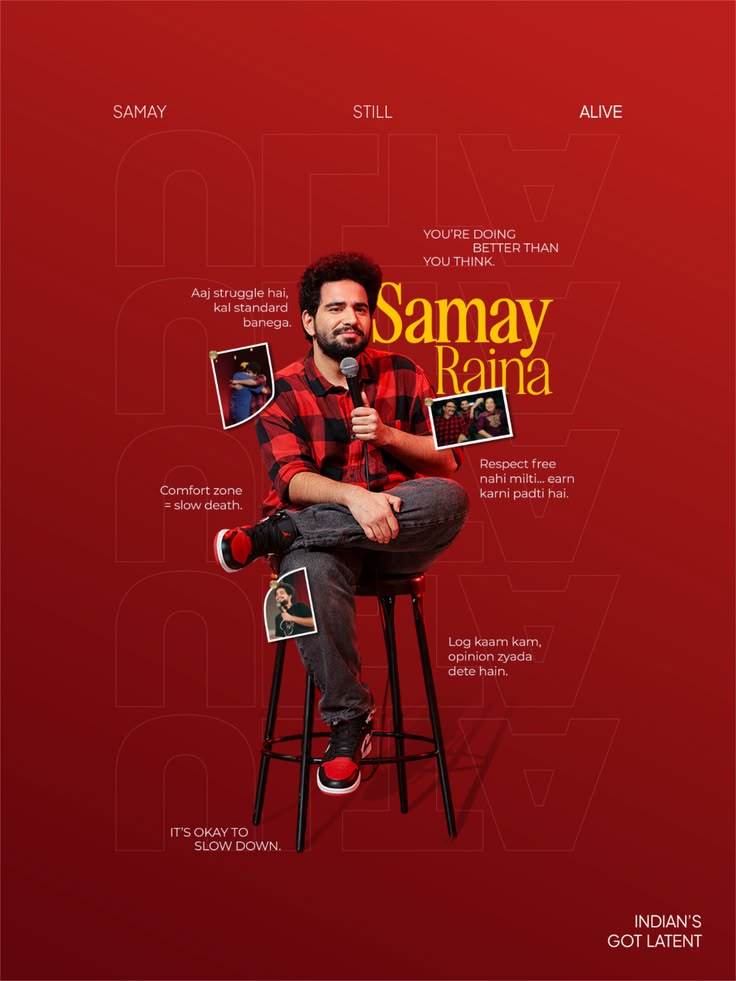
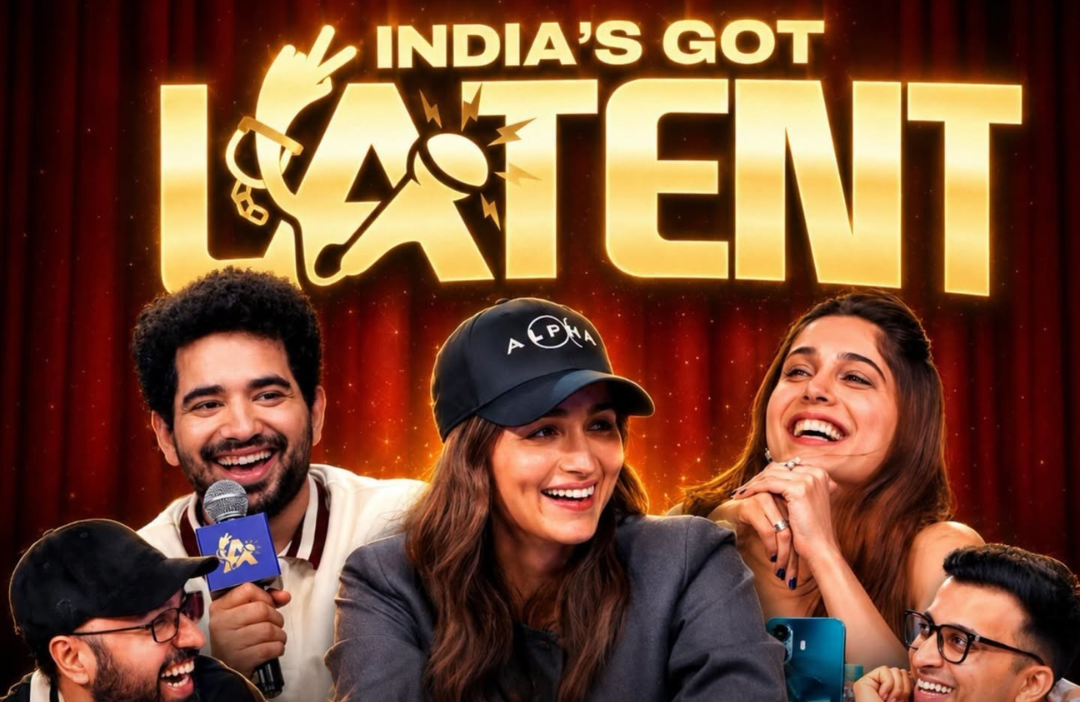
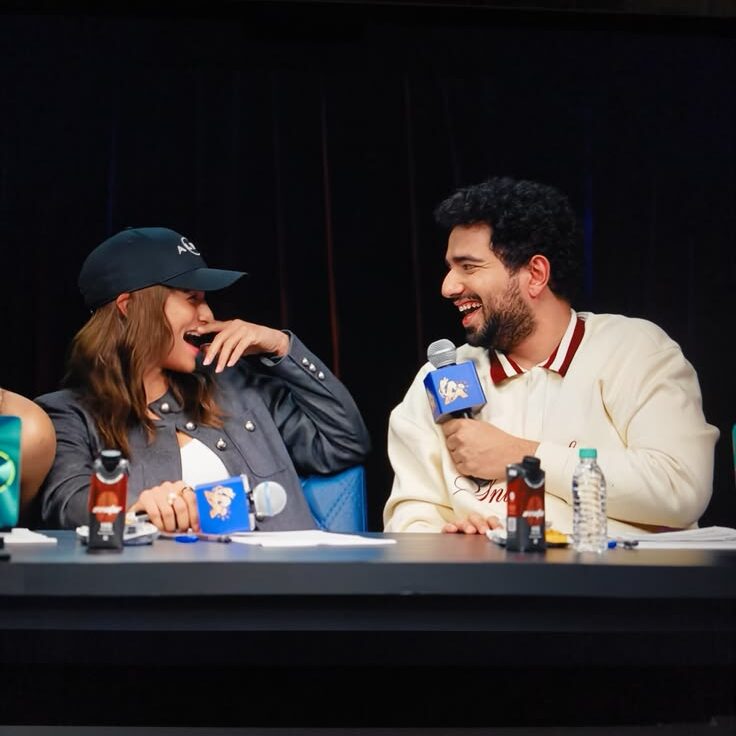
Samay Raina a known Indian comic has over the past decade has crafted a huge fan following as a stand-up comedian and chess-adjacent streamer before launching his panel show “India’s Got Latent” on YouTube in June 2024. It borrowed the bones of the International Got Talent franchise but combined it with elements from shows like “Kill Tony”. The show’s entire appeal rested on dark humour combined with unpredictable and unfiltered banters between the contestants, the panel and the audience. India’s Got Latent was loved by the masses, with panel members spanning from comedians, musicians, public figures and even popular celebrities.
Anatomy of a Panel Show Controversy :
The November 2024 Episode
On 14 November 2024, a member-only episode featuring podcaster Ranveer Allahbadia (BeerBiceps), YouTuber Ashish Chanchlani, influencer Apoorva Mukhija, and comedian Jaspreet Singh took a turn that would follow the show for the next 18 months. Allahbadia posed a sexually explicit hypothetical question to a contestant; Singh added a similar remark. In a separate exchange, Mukhija’s banter with a participant was widely read as sexually inappropriate.
Within days, the clip escaped the paywall and spread across social media. The backlash was immediate: actors, parliamentarians, women’s rights advocates, and ordinary users condemned the remarks, and the panellists began receiving rape and death threats.
The Legal Cascade: Three FIRs, Three States
- Guwahati Police Cyber Crime Unit (10 February 2025): BNS Sections 79, 95, 294, and 296; Cinematograph Act Sections 4 and 7; Indecent Representation of Women (Prohibition) Act Sections 4 and 6.
- Maharashtra Cyber Department (mid-February 2025): BNS Sections 79, 196, 296, and 299, plus IT Act Section 67. Filed in Thane, transferred to Khar Police Station, Mumbai.
- Jaipur, filed by the Jai Rajputana Sangh (17 February 2025): also transferred to Khar Police Station on jurisdictional grounds.
Raina pulled every episode of India’s Got Latent from YouTube on 12 February 2025 and cooperated with investigators. Allahbadia petitioned the Supreme Court under Article 32 for protection from arrest. On 18 February 2025, a bench led by CJI Surya Kant condemned the remarks but granted interim protection on the precondition that Allahbadia be made to surrender his passport, cooperate with the investigation, and stop uploading content across any social media platform, including his podcast. That content restriction was lifted on 3 March 2025.
A separate complaint, from the Cure SMA Foundation, targeted a segment from the same period in which Raina and his panellists mocked the cost of treating spinal muscular atrophy, a rare genetic disorder. Raina and co-panellists Vipul Goyal, Balraj Ghai, Sonali Thakker, and Nishant Tanwar issued an unconditional apology; the Court ordered the group to organise fundraisers and involve people with disabilities on their platforms.
The Legal Framework Governing Content Like This
Panel show content in India can trigger liability under five statutes: the Bharatiya Nyaya Sanhita (defamation, obscenity, and hate speech provisions), the IT Act (online obscenity), the Indecent Representation of Women Act, and the Cinematograph Act (certification requirements).
- BNS Section 356 — defamation
- BNS Sections 294–296 — obscenity: distributing pornographic content, selling obscene material to minors, obscene language in public
- BNS Section 196 — promoting hatred on religious, linguistic, regional, or caste grounds
- BNS Section 299 — acts intended to outrage religious sentiment
- IT Act Section 67 — publishing or transmitting obscene material online
- Indecent Representation of Women Act, Sections 4 and 6 — indecent depictions of women in any medium
- Cinematograph Act, Sections 4 and 7 — CBFC certification required before public exhibition
Netflix vs. YouTube: Why the Platform Changes the Legal Exposure?
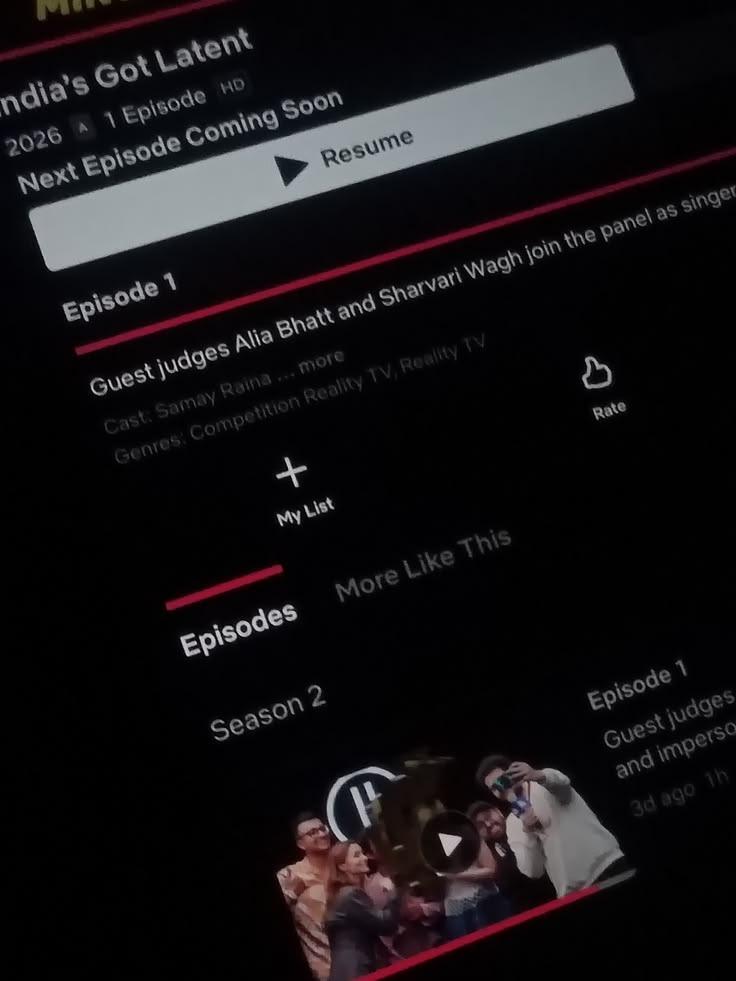
Raina’s Season 2 arrived in June 2026 with a simultaneous Netflix-YouTube release.
The clash between content regulation, moderation and even the reach is nowhere more evident than in the contrast between the two content giants, Netflix and YouTube, the two titans have redefined how content is controlled and even moderated within their premises. Typically, debates on content moderation start with an important question: On which platform was the conversation held? For years, the term “streaming platforms” has been used by lawmakers to group together all platforms that allow users to stream content. However, a provocative joke delivered on Netflix would operate in a completely different regulatory arena than YouTube.
With the rise of the creator economy, a platform’s interface and design have become key variables in platform regulation. Netflix is a carefully curated subscription service platform where content is reviewed, screened, rated and revised before it reaches your screens, while YouTube, by contrast, is an open marketplace as a publishing platform that allows anyone with an internet connection to become a broadcaster in seconds. The architectural difference is evident.
Netflix resembles what lawyers would describe as a closed garden. Each film, series or comedy special is licensed and commissioned, edited and re-edited, age-rated and then released to subscribers. There exists a certain degree of editorial discretion before the content is telecast. With this discretion comes responsibility. Netflix exercises a certain degree of meaningful control over its catalogue and is known to deliver controversial topics through its independent or collaborative productions. Therefore, the regulators are entitled to a higher level of accountability from Netflix regarding the nature of its catalogue.
This editorial control transcends commissioning decisions to the management of the audience. Netflix enables subscribers to create customizable Kids profiles, maturity ratings, PIN-protected profiles and restricted access to certain content. Content descriptors provide detailed information on a range of topics, including violence and strong language, nudity, substance abuse or self-harm. These steps ensure that the viewer is adequately informed before watching the content. Nevertheless, the philosophy is crystal clear – “restrict access before exposure occurs.”
On the other side of the coin, YouTube doesn’t function as a distributor; it provides an infrastructure. Every minute, content creators upload hundreds of hours of content, and it is practically impossible to conduct a full pre-publication review. Community guidelines, automated systems, flagging content from trusted community members and reviewers collectively attempt to identify harmful content after publication, but not before it is actually published. This is an inevitable consequence of a platform built on openness and participation.
However, this architectural split has legal ramifications beyond moderation of content, as towards cancel culture, the effects of unfiltered content ripple from the moment content is uploaded. First comes the classic speed-versus-safety conundrum. A controversial clip can be pushed through YouTube’s recommendation feeds, shorts and repost channels within hours. Even though the original upload is eventually taken down for violating community guidelines, copies of it frequently continue to circulate elsewhere.
Second is the often-underappreciated distinction concerning child safety. Public discourse assumes that both Netflix and YouTube offer parental controls. In practice, there lies a greater difference. Netflix parental controls are integrated into the primary viewing interface. Therefore, the system operates as a filtering system.
Although YouTube Kids, account supervision and Family Link are essential safeguards, the main platform continues to operate as an open ecosystem. Age restrictions often depend upon users’ account settings, user declarations and voluntary parental configuration. However, controversial content rarely remains confined; individual clips are extracted and transferred to third-party channels. This makes comprehensive parental oversight a distant dream.
Finally, there lies a risk of algorithmic amplification. Netflix suggests programmes from an “enumerated selection” upon which it conducts editorial oversight. YouTube’s recommendation engine works in a completely different manner. It’s not just about organising content; it’s about enabling visibility. If the videos are getting unusually high engagement rates, admiration, outrage, controversy or curiosity, they may be distributed further via algorithms, turning a single piece of speech into mass communication in a short span of time.
The Comeback: How Legal Teams Are Now Built Into Production
Raina’s comeback was indeed unexpected, but what drew more attention than the platform strategy was the legal team behind it: Mumbai media and entertainment firm Hirani & Associates, a 12-lawyer team now embedded in the production process from the start.
That team runs pre-emptive risk assessments before a single episode is shot, checks the roast segments, audience participation, and improvised exchanges for where satire ends and obscenity or defamation begins. They clear references to public figures, trademarks, and copyrighted material, screen for hate speech and public decency risk, and manage platform-specific compliance, since Netflix’s standards and YouTube’s Community Guidelines aren’t the same rulebook. Beyond content review, the team handles IP clearances, indemnity structuring, and reputational risk allocation. The new legal strategy is now not about who reacts better but is embedded into the core production.
What This Means for India’s Creator Economy Going Forward
India’s creator economy is large enough now that this isn’t a niche legal question. A Boston Consulting Group report counts 2 to 2.5 million Indian creators, driving over USD 350 billion in annual consumer spending, a figure projected to cross USD 1 trillion by 2030.
Regulators still tend to lump every platform under “streaming” and write one set of rules for all of them. That approach doesn’t hold up against how differently Netflix and YouTube actually operate, and it won’t scale with an industry this size.
India’s Got Latent’s arc, from three FIRs and a Supreme Court petition to a pre-cleared, lawyer-reviewed Season 2, is a preview of where the rest of the industry is headed: away from firefighting, and toward legal infrastructure built in from the start.